Rotating-board twist on arrow-matching mobile puzzles
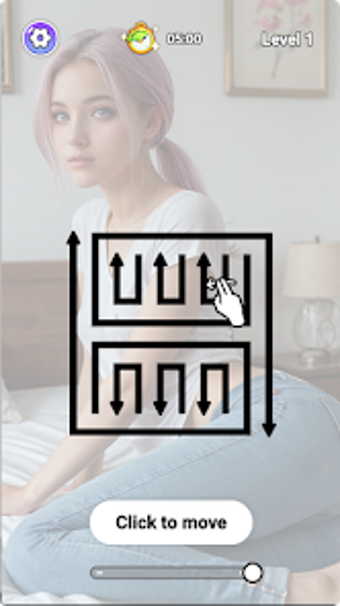
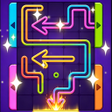
Swirl Arrow Crash from Readora Studio is an Android puzzle title that reconceives matching by asking players to rotate the entire board to align arrows. The core activity requires board rotation to gather and crush matching arrows, supported by physics-inspired swirling movement and simple tap-and-rotate input. The app highlights progressive difficulty, dynamic level layouts, and a minimalist visual approach. It targets casual mobile puzzle players and families who want short, spatial-reasoning challenges on phones and tablets.
How does this differ from standard match-3 puzzlers?
The game departs from static grid matching by making the whole playfield interactive; instead of swapping tiles, players rotate the environment to bring arrows together. This mechanic replaces tile swapping with spatial manipulation, so solving relies on timing and board orientation as much as pattern recognition. Early comparisons to classic match-3 titles help set expectations, but the emphasis here is on continuous motion rather than discrete swaps.
Does it focus on single-player puzzle sessions rather than competitive modes?
The developer frames the title for casual mobile audiences rather than multiplayer competition, which suggests play is designed for solo sessions and short rounds. Levels advance in complexity, introducing new arrow patterns and board shapes as players progress. Controls use simple tap-and-rotate input, so onboarding centers on mastering rotation and timing rather than social or ranked play systems.
What does the game look and sound like?
The visual design leans minimal, with clear arrow shapes and smooth animations that underline match results. Initial user feedback specifically praises the satisfying crush effects, which supply tactile clarity when alignments succeed. The interface keeps elements sparse to aid recognition, and sound design appears to emphasize feedback cues tied to successful clears rather than layered ambient tracks.
Is it easy to learn and how does progression behave?
Onboarding relies on the casual user interface and straightforward tap-and-rotate controls, so new players can begin rotating the board immediately. Difficulty increases through more complex arrow arrangements and varied board layouts, demanding greater spatial reasoning and timing from later stages. That progression rewards practice with pattern anticipation but asks players to adapt as swirl physics introduce more movement into solutions.
In summary, a compact pick for curious mobile puzzlers
The game is a creative, experiment-driven offering best suited to players who enjoy short, spatial puzzles and trying new mechanics. As a relatively new release that is still establishing its user base, it appeals more to early adopters than to those seeking mature competitive ecosystems. The developer's existing casual-genre portfolio suggests a focus on bite-sized sessions rather than long-term tournament play.